
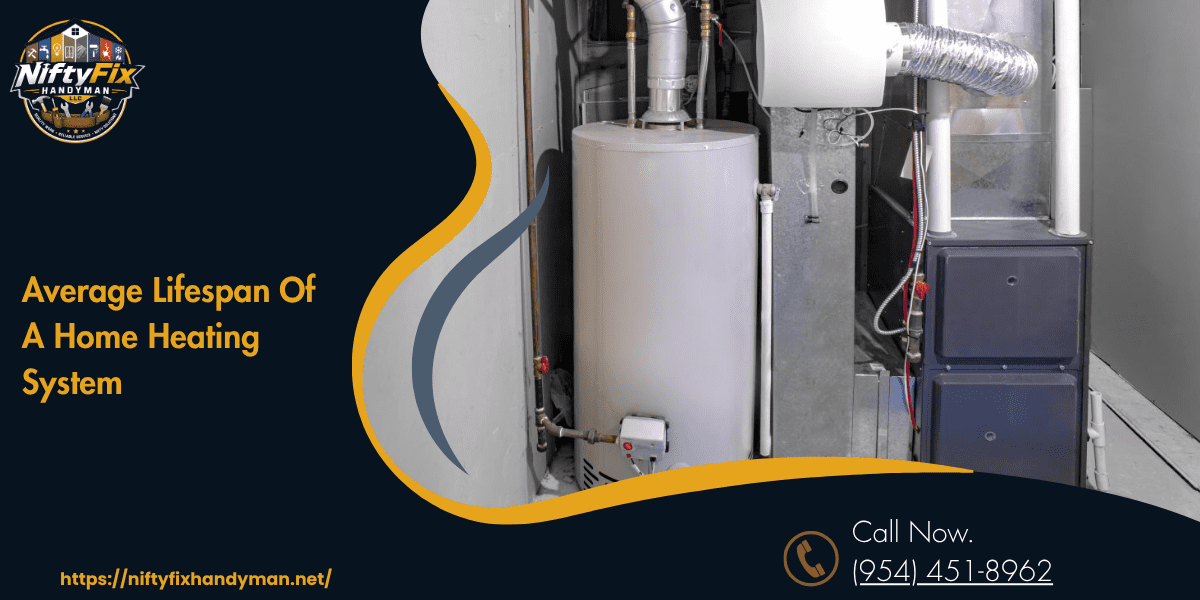
A dependable home heating system can make your house comfortable during cold weather but will come to the conclusion of its functionality. Knowing ahead of time the expectations saves both homeowners time and money and helps them know when replacement is possible to be both affordable and feasible. Nifty-fix Handyman LLC assists homeowners in making wise decisions when it comes to heating care.
Home Heating System Lifespan
The factors that influence the type of heating system, quality of installation, use, climatic factors, and maintenance are the determinants of the lifespan of a heating system. With proper maintenance, a furnace is supposed to have a life of 15-20 years, and a boiler could have a life of 20-30 (and in other cases a lot more). New industry statistics indicate that the median replacement age is estimated to be about 18 years for both furnaces and boilers, and this makes the condition look like an important factor because age is not crucial.
A properly maintained system can be used even past the anticipated limit. However, the only factor that does not imply the equipment is not to be repaired is the age factor. Incidents of frequent breakdowns, increased energy prices, imbalance in heating, strange noises, and deteriorating performance rates are some of the signs that replacement is worth considering.
Lifespan of Furnace and Boiler
A furnace has a lifespan of approximately 15-20 years. Lifespan may be changed depending on the type of fuel, installations, operating time, airflow, and maintenance. Necessary changes such as replacement of filters and setting up of inspections will help to ease the burden on the blower motor, heat exchanger, and ignition system.
A majority of the systems have fewer moving components, hence leading to a long service life of boilers. With good maintenance, proper water quality, and addressing maintenance problems, a boiler can be created or maintained reliably for decades. Before deciding to continue using old boilers, their efficiency, safety, and cost of repair should be considered.
What Shortens Heating System Life?
There are a number of factors that may make the heating equipment age prematurely. Imperfect installation might form an airflow or performance issue initially. Failure to maintain leads to dirt or restricted filters, worn parts, and other issues that impose extra demands on the system. Wear may also be experienced due to excessive use, especially where there is long usage of equipment when it is in extreme weather like extreme winter.
Consider ventilation, insulation, and ductwork. The heating system may be rendered unnecessary due to the loss of heat. Issues of home efficiency related to resolving to set the operating needs down to maximize comfort.
When Should You Replace an HVAC System?
It will be even more logical to speak of replacement in case the older unit requires frequent repairs or does not provide consistent heating anymore. When the equipment is nearly approaching or even surpassing its expected service duration, a major component breakdown can be of high significance. Better efficiency, temperature, and reliability are also a possibility with newer systems.
Check out their aging machines and estimate the maintenance and compare the cost to replace them against the cost of maintenance before making a final decision. This will also be proactive to prevent an undesirable loss of heat during the coldest season of the year.
Heating System Maintenance and Lifespan
One of the easiest methods of ensuring a heating investment is frequent maintenance. Arrange professional checks as per the recommendations of the equipment manufacturer, replace or clean filters when necessary, maintain clear vents, and take care of unusual sounds or performance changes that arise.
Maintenance may not enable equipment to be timeless, but it may help in identifying little problems before they may end up being very expensive breakages. It may also be applied for faster and safer operation, as well as training homeowners with regard to when their system is approaching its useful life.
FAQs
1. The life of home heating is how many years?
The life span of residential boilers measures 20 to 30 years, and that of residential furnaces is 15-20. The actual lifespan is based on maintenance, installation, and use,e and the state of the equipment.
2. How often is the maintenance of a heating system performed?
The range of most systems is realistic when employing professional maintenance annually. Filter checks and replacement/cleaning should also be regularly performed according to the recommendations of the manufacturers and the age and peculiarities of the home conditions.
3. Should I fix or have a new furnace?
It can be reasonable to repair when the issue is insignificant, and the furnace is reliable otherwise. Substitution may be found more viable in instances where the repair may be a frequent phenomenon, the prices may skyrocket, or where the system is about to reach the end of its marketed life.
4. Does it prolong the life of the furnace and boiler?
Yes. Frequent inspection, cleaning, replacement of filters, and restoration in time can reduce the load on components and assist equipment to operate effectively to have a long life.
5. How do you know when your heating system needs changing?
There can be constant failures, problematic heating, strange sounds and noises, increased energy-related expenses, bad functioning, and age of the system, all signs that make it possible to think that replacement is to be considered.